












































Women’s footwear has long been caught in a tension between style and comfort, between how shoes look and how they actually serve the feet that wear them. Generations of women have squeezed into narrow toe boxes and balanced on elevated heels, often paying a price in comfort and foot health. Against this backdrop, barefoot shoes for women offer a refreshing alternative, one that prioritizes the natural function and wellbeing of the foot without abandoning the desire to look good. Understanding what these shoes offer specifically to women reveals why so many are making the switch and not looking back.
The particular history of women’s footwear
It is no secret that women’s shoes have often been designed with appearance taking priority over function. Pointed toes that compress the foot, elevated heels that alter posture and balance, narrow shapes that bear little resemblance to the actual form of the foot.
These design choices have real consequences for foot health over time. The barefoot approach represents a deliberate departure from this tradition, asking instead what the female foot actually needs to function well and remain healthy throughout a lifetime of use.
Respecting the natural shape
One of the most important features of barefoot footwear is the wide toe box, and this matters particularly given how conventional women’s shoes have often been shaped. Many traditional designs taper sharply, forcing the toes into an unnatural, compressed position.
Barefoot designs do the opposite. They give the toes room to spread naturally, respecting the true anatomy of the foot. This freedom allows the foot to function as it should, providing a stable base and proper balance. For women whose feet have long been confined, this space can feel like a revelation.
The question of the heel
Elevated heels have been a fixture of women’s fashion for centuries, but their effects on the body are well documented. Raising the heel shifts the body’s alignment, alters posture, and changes how weight is distributed through the foot and beyond.
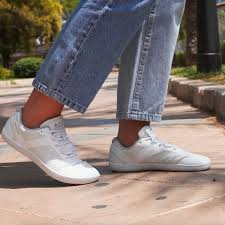
Barefoot shoes embrace the opposite principle with their flat, zero-drop design. The foot sits level, as it would standing on natural ground, allowing the body to maintain its natural alignment. This does not mean sacrificing elegance, as many barefoot designs achieve a clean, attractive look while keeping the foot in a healthy position.
Movement that feels natural
Beyond the structural features, what many women notice first is how different it feels to move in barefoot shoes. The thin, flexible sole allows the foot to bend and flex naturally, while the ground feel provides a sense of connection that cushioned shoes mute.
A new awareness
This sensory experience often brings a heightened awareness of movement. Walking becomes more conscious, more connected to the surfaces underfoot. Many women describe feeling more grounded and present, more in tune with their own bodies as they move through the day.
Strength over time
Allowing the foot to work naturally engages muscles that supportive shoes often leave dormant. Over time, this can contribute to stronger, more capable feet, building resilience from the ground up rather than relying on external support.
Style without compromise
A common concern is whether choosing foot health means giving up on style. Happily, this is increasingly a false dilemma. Modern barefoot footwear for women comes in a range of designs that prove function and form can coexist.
The challenge for designers is to honor the principles of natural movement while creating shoes women want to wear. The best designs succeed at exactly this, offering the wide toe box, flat sole, and flexibility that define barefoot footwear, wrapped in styles suited to different occasions and tastes.
Approaching the transition wisely
For women accustomed to conventional shoes, especially those with elevated heels, the transition to barefoot footwear deserves patience. Feet adapted to support and elevation need time to adjust to a flat, unsupported environment.
The recommended path is gradual. Introducing barefoot shoes slowly gives the feet time to strengthen and adapt without strain. Starting with shorter periods and building up allows the natural transition to happen comfortably. Those who proceed thoughtfully tend to find the change deeply rewarding.
A choice that honors the body
Ultimately, choosing barefoot shoes is about more than footwear. For many women, it represents a decision to prioritize their body’s natural design over conventions that never truly served them well.
It is a choice that says comfort and health need not be sacrificed for appearance, and that the natural function of the foot deserves respect. For women who have spent years in shoes that fought against their anatomy, the freedom of barefoot footwear can feel like reclaiming something important. And in that reclaiming lies the real appeal, the simple yet powerful act of letting the feet, and the whole body, move the way nature intended.