




























































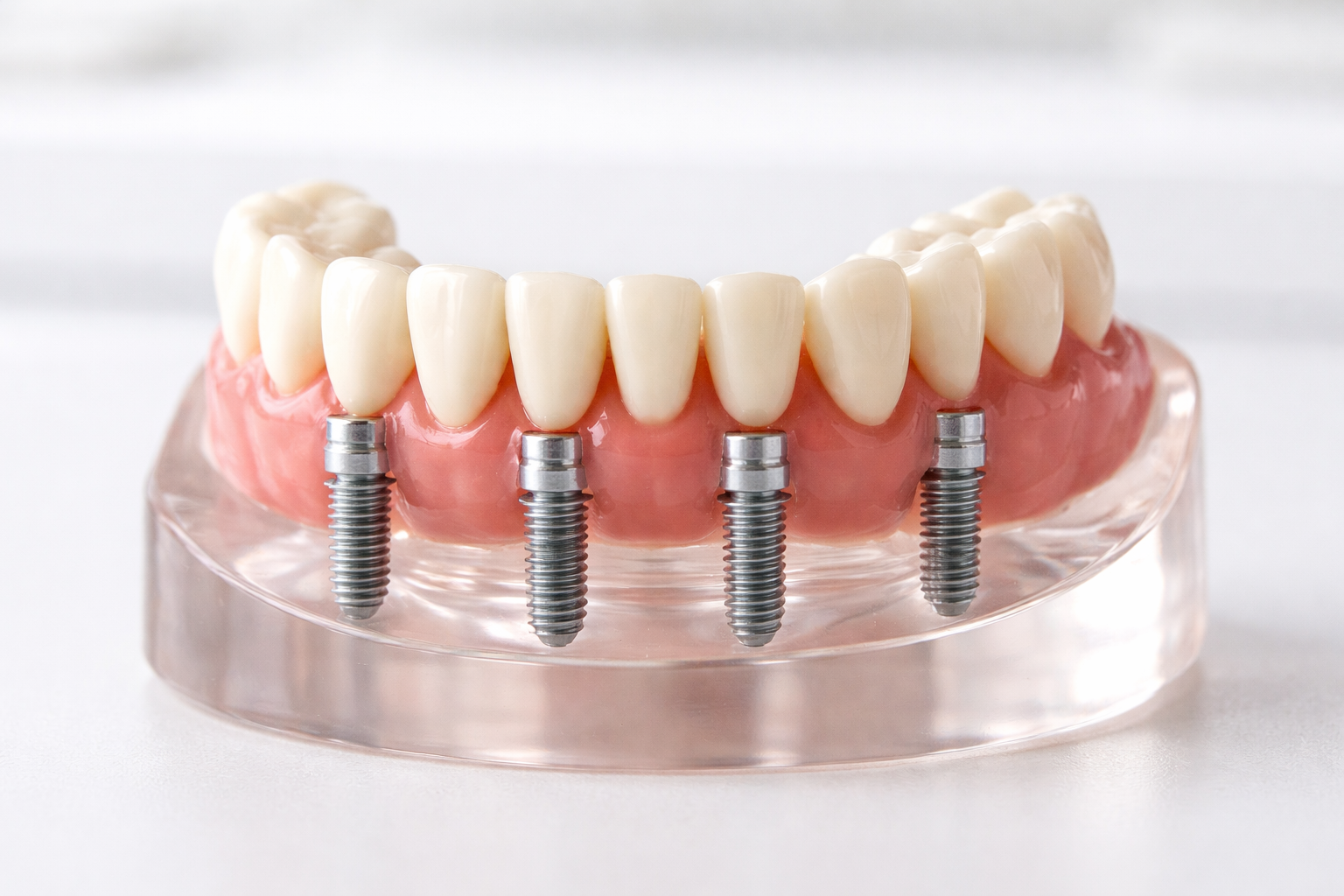
For millions of Americans living with failing teeth or uncomfortable dentures, All-on-X dental implants have emerged as a transformative solution. The concept is straightforward: replace an entire arch of teeth using just four to six strategically placed implants, giving patients a permanent, fixed set of teeth that look, feel, and function like natural ones.
But the decision to pursue full mouth restoration is significant. It involves surgery, a meaningful financial investment, and a recovery period that requires patience and adherence to aftercare protocols. The abundance of marketing around “teeth in a day” can make the process seem simpler than it actually is, which leads to unrealistic expectations and, in some cases, poor outcomes when patients choose providers based on price rather than expertise.
Understanding exactly what All-on-X involves, who it is best suited for, what the recovery looks like, and what the long-term benefits and limitations are helps patients make informed decisions rather than emotional ones.
How All-on-X Works and Why It Changed Implant Dentistry
Traditional dental implants replace missing teeth one at a time. Each implant requires sufficient bone density at its specific location, which can be a serious limitation for patients who have experienced significant bone loss after years of missing teeth or wearing dentures. In these cases, bone grafting procedures that add months and thousands of dollars to the treatment timeline were often the only option before All-on-X existed.
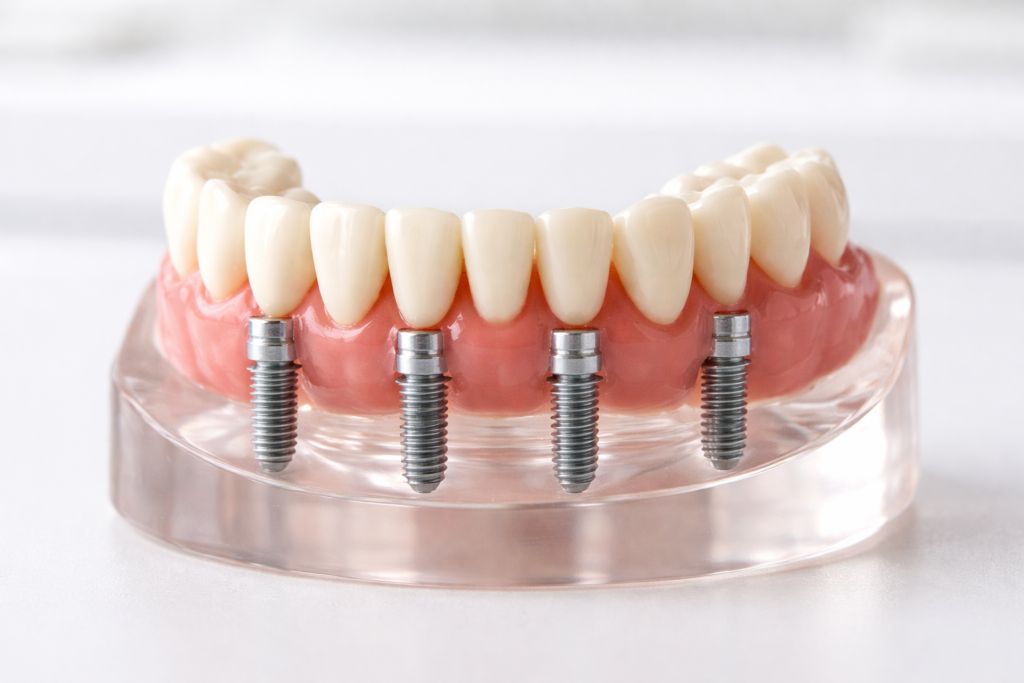
All-on-X takes a fundamentally different approach. Instead of placing individual implants for every missing tooth, four to six implants are positioned at precise angles within the jaw to maximize contact with available bone. The posterior implants are tilted at approximately 30 to 45 degrees to engage denser bone areas near the sinus cavities in the upper jaw and the mental foramen in the lower jaw. This angled placement often eliminates the need for bone grafting procedures entirely.
Once the implants are placed, a full arch prosthetic, essentially a complete set of upper or lower teeth, is attached directly to the implants using titanium screws. This prosthetic is fixed in place, meaning it does not come out for cleaning, does not require adhesive, and does not shift or slip during eating or speaking. It becomes a permanent part of your mouth.
The concept was originally developed using four implants per arch, hence the name “All-on-4.” However, many providers now place five or six implants when bone conditions allow, which provides additional stability and load distribution. The term “All-on-X” has become the industry standard to encompass all variations.
Who Is a Good Candidate
All-on-X is designed for patients who are missing most or all of their teeth on one or both arches, or whose remaining teeth are failing and need to be extracted. The most common candidates include long-term denture wearers who want a permanent alternative, patients with multiple failing teeth due to decay or severe periodontal disease, and individuals who have been told they lack sufficient bone for traditional individual implants.
The angled implant placement used in All-on-X often works for patients with moderate bone loss who would otherwise need extensive grafting. However, severe bone loss may still require grafting in some cases, and a thorough evaluation with 3D cone beam imaging is essential to determine candidacy accurately.
Practices like GD Dentistry in Trumbull, CT offer free consultations with CBCT scanning to give patients a clear, objective picture of their options before committing to any treatment. This kind of no-cost evaluation allows patients to understand their bone density, see their jaw anatomy on a 3D scan, and receive an honest assessment of whether All-on-X is right for their specific situation.
General health is also a factor. Uncontrolled diabetes, active radiation therapy to the head or neck, heavy smoking, certain autoimmune conditions, and medications that affect bone metabolism can all impact implant success rates. A qualified implant dentist evaluates these factors during the consultation and provides honest guidance about whether All-on-X is the right path or whether modifications to the treatment plan are needed.
The Treatment Timeline From Start to Finish
Understanding the full timeline helps patients plan their schedules, manage expectations, and prepare for each phase of the process.
The process begins with a comprehensive consultation that includes 3D CBCT imaging, a thorough clinical exam, a review of medical history and medications, and a detailed discussion of goals and expectations. The imaging is critical because it reveals bone density, nerve locations, sinus positions, and the exact anatomy that the surgical plan will be built around.
Treatment planning is the next phase. Using the 3D imaging data, the implant dentist designs a precise surgical guide that maps the exact position, angle, and depth of each implant. This computer-guided approach reduces surgical time, improves accuracy, and leads to better long-term outcomes.
On surgery day, any remaining failing teeth are extracted, the implants are placed according to the surgical guide, and a temporary fixed prosthetic is attached. This is the “teeth in a day” aspect that makes All-on-X so appealing. The patient leaves the office with a functional set of teeth, not a removable denture, on the same day as surgery. The procedure typically takes 2 to 4 hours per arch under local anesthesia or IV sedation.
Over the next three to six months, the implants undergo osseointegration, the biological process where titanium fuses with living bone tissue. During this healing period, the temporary teeth are fully functional for eating and speaking, though patients are advised to stick to softer foods for the first few weeks to avoid putting excessive pressure on the healing implants.
Once healing is confirmed through follow-up imaging, the temporary prosthetic is replaced with the final restoration. This permanent set of teeth is custom-designed for optimal fit, bite alignment, and aesthetics, crafted from high-grade materials like zirconia or acrylic over a titanium framework that mimic the translucency and color of natural teeth.
Patients in the Trumbull and Fairfield County area can check the office location, hours, and patient reviews on Google Maps to see firsthand experiences from other All-on-X patients.
Cost Comparison: All-on-X vs. Alternatives
Cost is one of the primary considerations, and it is important to evaluate it in the context of long-term value rather than upfront price alone.
A full arch All-on-X restoration typically ranges from $20,000 to $40,000 per arch, depending on the complexity of the case, the materials used for the final restoration, and the geographic location. This is a significant investment, but it covers the implants, the temporary prosthetic, the final restoration, and all associated appointments including follow-ups.
By comparison, replacing each tooth with an individual implant on a full arch could cost $60,000 to $90,000 or more, making All-on-X a more cost-effective approach for patients who need full arch replacement. Traditional dentures are far less expensive upfront, typically $1,000 to $3,000 per arch, but they require ongoing costs for adhesives, relines every 1 to 2 years, full replacements every 5 to 8 years, and additional dental visits that add up to $15,000 to $30,000 or more over 20 years.
When calculated over a lifetime, All-on-X often represents a lower total cost of ownership than dentures while delivering a dramatically better quality of life. Many dental practices offer financing options, and some dental insurance plans cover portions of the implant procedure. Understanding the full financial picture before committing helps patients make decisions they are comfortable with long-term.
Life After All-on-X: What Changes
Patients consistently describe All-on-X as life-changing, and the reasons go well beyond cosmetics.
Eating returns to normal completely. Foods that are impossible with dentures, apples, steak, corn on the cob, raw vegetables, crusty bread, become part of daily life again. The implants provide the same bite force as natural teeth, so there are no dietary restrictions once healing is complete. Many patients say the first time they eat a food they had been avoiding for years is one of the most emotional moments of the entire process.
Speech improves immediately. Dentures can cause slurring, clicking, and lisping, especially as they lose fit over time. Fixed implant teeth do not move, which means speech is clear, natural, and effortless.
Bone preservation is a critical long-term benefit that most patients do not fully appreciate until their dentist explains it. When teeth are missing, the jawbone gradually deteriorates. Dentures accelerate this process. Implants stimulate the bone the same way natural tooth roots do, maintaining bone density and preventing the sunken facial appearance that often accompanies long-term tooth loss.
Confidence returns in social situations. The constant anxiety about teeth shifting, falling out, or clicking during conversation disappears. Patients smile more, laugh more freely, and re-engage in social activities they had been avoiding.
Maintenance is simple and familiar. All-on-X teeth are cleaned the same way as natural teeth, regular brushing, water flossing or interdental brushes, and dental checkups twice a year. There is no soaking in solutions, no adhesive application, and no nightly removal.

Frequently Asked Questions
Does All-on-X surgery hurt?
The procedure is performed under local anesthesia or IV sedation, so patients feel no pain during surgery. Post-operative discomfort is typically mild to moderate, manageable with prescribed or over-the-counter pain medication, and subsides within 3 to 5 days. Most patients describe the recovery as significantly easier than they expected.
How long do All-on-X implants last?
The titanium implants themselves are designed to last a lifetime with proper care. The prosthetic arch may need replacement or refurbishment after 15 to 20 years due to normal wear, but the implant foundation remains permanent. This makes All-on-X one of the most durable tooth replacement options available.
Can I get All-on-X if I have bone loss?
In many cases, yes. The angled implant placement technique is specifically designed to work with available bone, often eliminating the need for bone grafting. A 3D CBCT scan during your consultation determines whether your bone density is sufficient. Even patients who have been turned away by other providers may qualify at a practice with more advanced implant experience.
Do I get teeth the same day as surgery?
Yes. A temporary fixed prosthetic is attached to the implants on surgery day. These temporary teeth are functional and aesthetic, allowing you to eat soft foods and smile while your implants heal over the next several months. The final permanent teeth are placed once osseointegration is confirmed, typically 3 to 6 months after surgery.
What happens if an implant fails?
Implant failure rates for All-on-X are low, typically around 2 to 5 percent. If an implant does fail during healing, it can usually be replaced with a new implant in the same or a nearby position. Factors that increase failure risk include smoking, uncontrolled diabetes, and poor oral hygiene during the healing period. Following your provider’s aftercare instructions carefully minimizes this risk.